

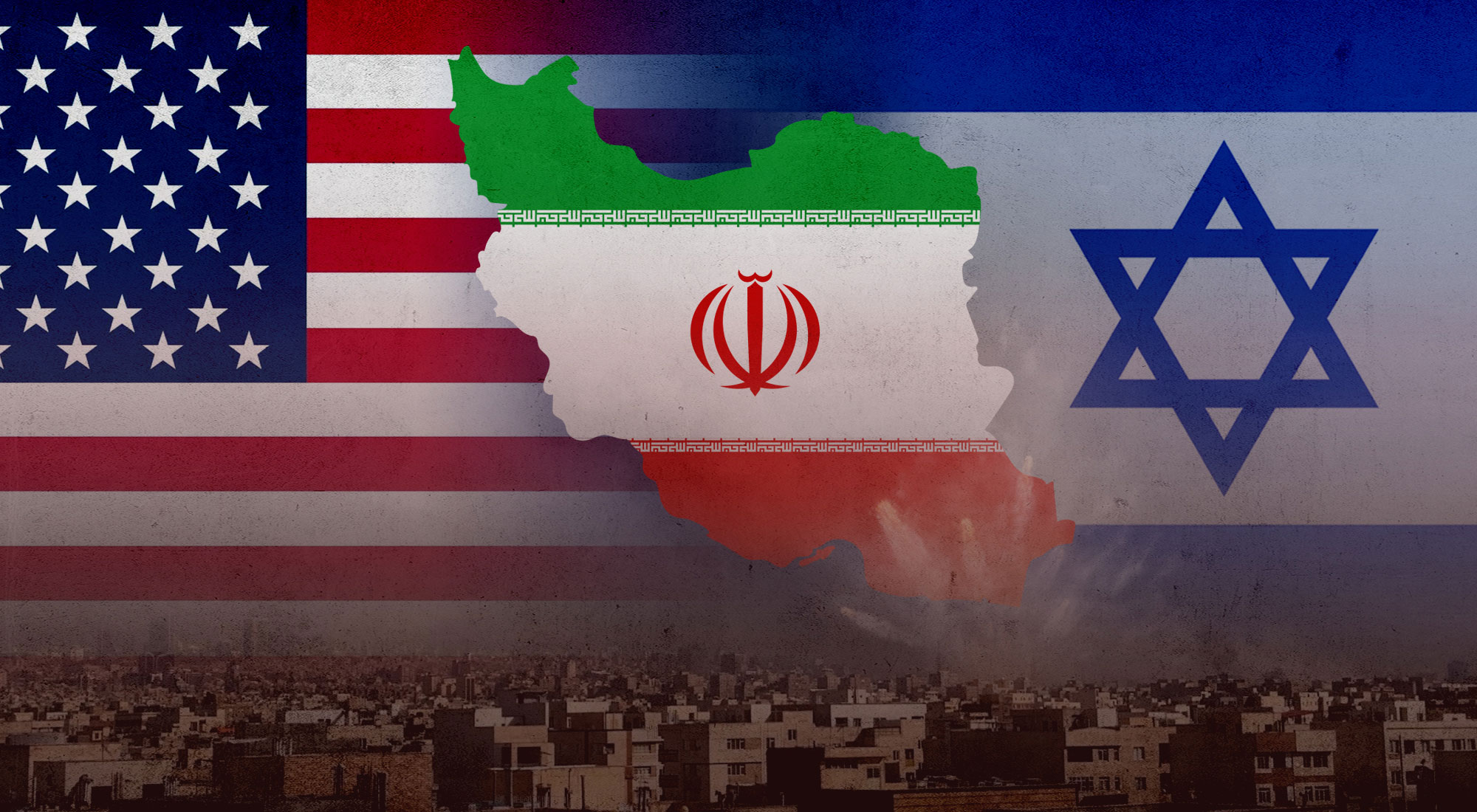
The 2026 United States–Iran war did not emerge in a vacuum. It is the culmination of decades of hostility rooted in the 1979 Islamic Revolution, nuclear suspicion, and ideological rivalry between Iran, the United States, and Israel. Yet while these structural tensions explain why conflict was possible, they do not fully explain how it escalated so rapidly into a costly regional war. That escalation, marked by the killing of Iran’s Supreme Leader, mass civilian casualties, and global economic disruption, raises a more uncomfortable question: is this war less about strategy and more about leadership, ego, and the declining logic of American empire?
At its core, the war was triggered by a calculated but risky decision. On 28 February 2026, the US and Israel launched coordinated “pre-emptive” strikes targeting Iran’s nuclear facilities, missile systems, and leadership. The stated goal was clear: prevent nuclear proliferation and neutralize a perceived existential threat. But the scale of the operation, particularly the assassination of Ali Khamenei, transformed a strategic strike into a regime-decapitation attempt. The result was predictable escalation. Iran retaliated across the region, targeting Israel, US bases, and allied states, while the closure of the Strait of Hormuz disrupted nearly 20% of global oil supply. Within weeks, at least 3,530 people had been killed in Iran, including over 1,600 civilians and 244 children, while USA and allied casualties mounted.
This is not simply a story of military confrontation; it is a case study in the limits of modern hegemony. For decades, American global power has relied not only on military superiority but also on legitimacy, the ability to frame its actions as necessary, rational, and broadly supported. That legitimacy is now eroding. The war reflects what political theorists describe as “imperial overstretch,” where military power is deployed to solve political problems it cannot resolve.
The United States may still possess unmatched military capabilities, but as history has shown, from Vietnam to Iraq, military strength alone cannot secure durable outcomes.
Indeed, early evidence suggests that the United States is not winning in any meaningful strategic sense. While US officials have declared a “military victory,” the reality is more ambiguous. Iran retains roughly half of its missile and drone capabilities, and crucially, its nuclear programme remains intact, with stockpiles of near-weapons-grade uranium still present. The removal of Khamenei did not produce regime collapse, but instead, new leadership emerged rapidly, potentially more hardline and defiant. In other words, the core objectives of the war, denuclearization and regime change, remain unmet.
The costs, however, are undeniable. Financially, the war is consuming more than $1 billion per day, amounting to over $33 billion in just 39 days. Militarily, the United States has lost equipment worth at least $2.35 billion, alongside 13 service members killed and hundreds wounded. Economically, the closure of the Strait of Hormuz triggered a global energy crisis, removing about 10% of the world’s oil supply and driving fuel prices in the US up by as much as 39%. Politically, the war has deepened domestic divisions and strained alliances, particularly within NATO, while creating strategic opportunities for rival powers such as China.
If the structural causes of the war explain its origins, leadership explains its trajectory. Donald Trump’s role in this conflict cannot be ignored. His decision-making style, characterized by ego, hubris, and a deeply personal approach to power, has shaped the course of the war in ways that undermine strategic coherence. Trump’s belief in his own infallibility, captured in the phrase “I alone can fix it,” has translated into unilateral action without sufficient consultation with allies or Congress. This has not only weakened international support but also reduced the legitimacy of US actions on the global stage.
More importantly, Trump’s leadership reflects a fundamental misunderstanding of modern power. In a world defined by complex interdependence, power is no longer purely military; it is also economic, diplomatic, and ideological. Yet Trump approaches conflict as a zero-sum contest, a “warrior” mentality in which victory must be absolute and immediate. This mindset encourages escalation rather than negotiation, spectacle rather than strategy. The result is a war without a clear endgame, driven more by the pursuit of dominance than by achievable political objectives.
This is where ego becomes dangerous. Trump’s narcissistic traits, his need for validation, hypersensitivity to criticism, and tendency to surround himself with loyalists, limit his ability to adapt or learn from unfolding realities. Strategic flexibility is replaced by rigid insistence on success, even when evidence suggests otherwise. His impulsive and erratic decision-making style, often described as “kaleidoscopic,” leads to inconsistent policies and abrupt shifts in direction, undermining both military coordination and diplomatic efforts.
The consequences are visible. The United States finds itself locked in a conflict that it cannot decisively win, yet cannot easily exit. Iran, despite suffering significant damage, has retained critical capabilities and even gained leverage by controlling the Strait of Hormuz, reportedly charging up to $2 million per ship transit. Far from being weakened, Iran has emerged as a more defiant and strategically influential actor, while the United States faces declining credibility and reduced deterrence.
This dynamic reflects a broader transformation in global power. American hegemony, once defined by overwhelming economic and political dominance, is now increasingly contested. The US share of global output has fallen dramatically from about 50% in 1950 to around 21%, while competitors such as the European Union and China have risen. At the same time, the effectiveness of military power in sustaining global leadership has diminished. As the theory of hegemony suggests, dominance depends not only on force but also on consent, which is the ability to shape global norms and secure cooperation. In this war, that consent, is notably absent.
The question is not whether the United States is losing militarily, it is whether it is losing strategically, politically, and morally. The evidence suggests that it is. The war has exposed the limits of coercive power, the fragility of alliances, and the risks of leadership driven by ego rather than strategy. It has also highlighted a deeper truth: empires do not fall only because of external challenges, but because of internal contradictions, including overconfidence, miscalculation, and the inability to adapt to changing realities.
Trump’s leadership embodies these contradictions. His aggressive, confrontational style may deliver short-term spectacle, but it undermines the long-term foundations of American power. By prioritizing personal legacy over strategic coherence, he risks accelerating the very decline he seeks to reverse.
The war with Iran may not end in outright military defeat for the United States. But if current trends continue, it could mark something more significant, the moment when American hegemony, long sustained by a balance of power and legitimacy, begins to unravel under the weight of its own contradictions. In that sense, the real question is not whether Trump is dragging America toward defeat on the battlefield, but whether he is hastening the decline of the empire itself.
Join the Discussion
Share your thoughts and engage with the community
Leave a Comment
Comments
No comments yet. Be the first to share your thoughts!